


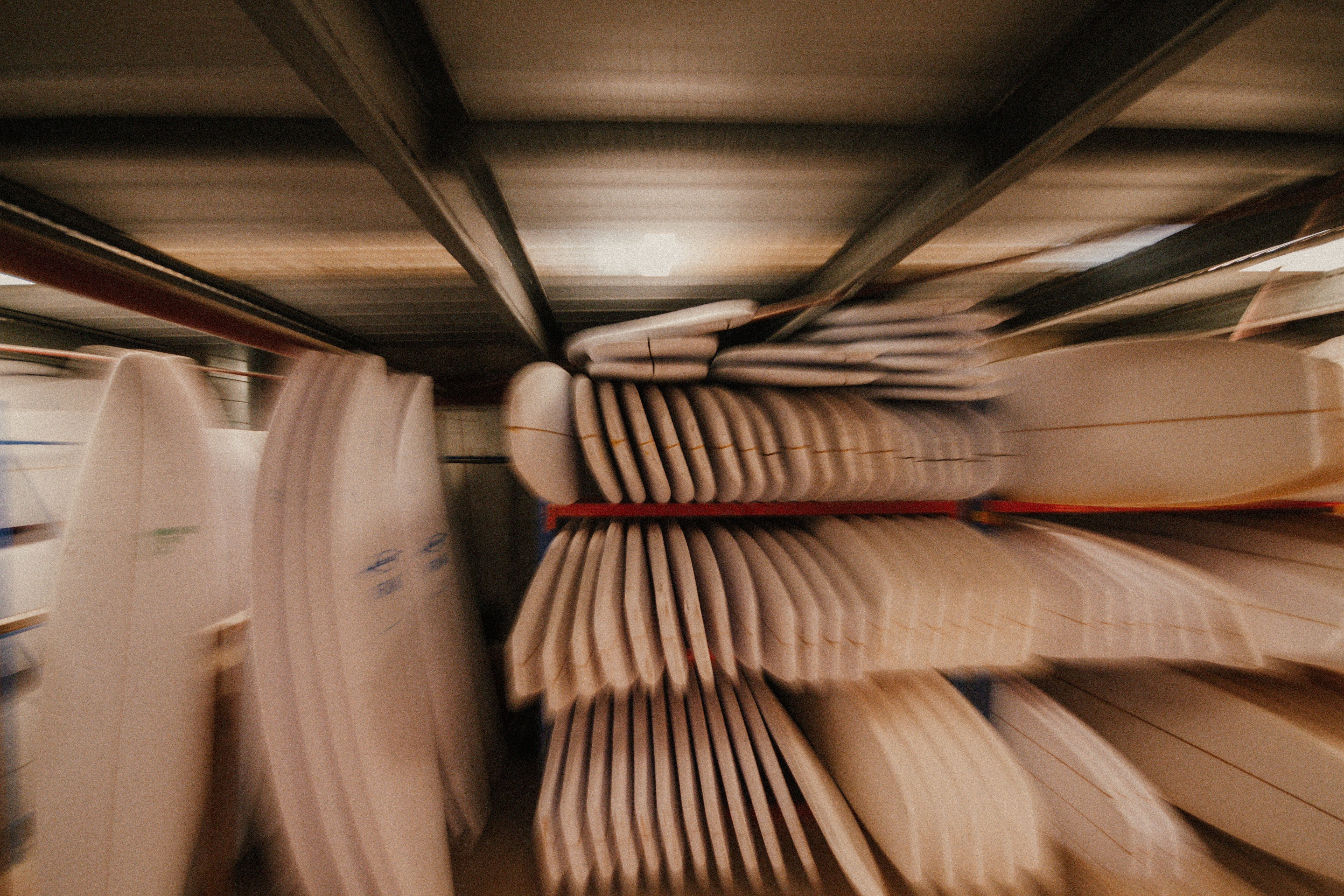
Heavy Is Relative
A good surfboard should feel less like a disposable product and more like a favourite jacket. The one that gets better every year you own it. The one that carries a few scars but still does exactly what you ask of it.
A good surfboard should feel less like a disposable product and more like a favourite jacket.
Pick up an old surfboard.
Not a surfboard shaped to look old. An actual old surfboard.
One with more dirt in the wax than actual wax. The logo is from a mostly forgotten label or glass house, long since left to the dust.
The rails have stories.
Yet somehow it's still watertight, and has fewer deck compressions than your six month old shorty.
There is a strange obsession in surfing with making everything lighter.
Lighter boards.
Lighter fins.
Lighter wetsuits (this one is actually worthy).
As if lighter automatically means better.
And yes, sometimes it does.
But most of the time it's more complicated than that.
A good surfboard should feel less like a disposable product and more like a favourite jacket. The one that gets better every year you own it. The one that carries a few scars but still does exactly what you ask of it.
Now what actually goes into construction?
Let's start with the core. This is arguably the most important ingredient of a long lasting surfboard.
There are many different grades and kinds of foam. EPS to PU and now a myriad of eco blanks.
Generally speaking, 80 to 90% of the surfboards ridden today are PU construction. EPS holds its place in certain conditions. Think perfectly formed beach breaks that lack power and require immediate speed generation, or a fresh water wave pool where added buoyancy is your best friend.
PU, or polyurethane construction, is strong, generally longer lasting, and slightly more resistant to water ingress should the board suffer a ding. But it comes with a weight consideration.
EPS blanks begin their life in a much lighter form. When blown, the chemical reaction between the foam and additive results in a blank with roughly 25% more air trapped inside when compared to PU construction.
The result is a far lighter and more buoyant board.
Now comes the glass
E-cloth. S-cloth. Flax. Carbon.
What does it all mean?
Is it that important?
Well, like surfboard foam, there are different grades, weights and weaves of fiberglass.

Most commonly used in surfboard manufacturing is Electrical Glass, or E-glass. This is the industry standard. Easy to work with, cost effective, and offering the perfect balance between strength and flexibility.
Flexibility is an important factor here, as the more rigid the glassing is, the more likely the board is to develop stress fractures.
Think bridge construction. Bridges are engineered for movement, expansion and contraction to extend longevity.
Surfboards are the same.
S-glass is known as Structural Glass and comes from an aerospace background.
It is chemically formulated to be roughly 30% stronger and stiffer than E-glass. Because it is stronger, shapers can sometimes use less of it to achieve the same strength as E-glass, resulting in a lighter board that is highly resistant to heel dents and snapping.
What's the catch, you might ask?
It is significantly more expensive than E-glass and far harder to work with during the glassing process.
Now that you understand the glass types and lingo, let's move into weights.
Glassing weights
In my opinion, the strength of a board comes in the form of the blank used. If an inferior product is used in the blank blowing process, or too light of a blank is blown, the longevity of the surfboard is hindered right from the beginning.
The second most important ingredient to a well constructed surfboard is the glassing.
Think of the glassing as the longevity, and the blank as the overall strength.
If we glass a dense blank with a single layer of 4oz cloth on the deck, we are met with a nicely weighted surfboard, but also a surfboard that will get dings and dents relatively easily.
This is where glassing weights come into play.
Standard glassing for us is generally a 6 + 4oz deck with a 4oz bottom for boards without channels.
As soon as we move into channel territory, we generally recommend glassing the bottom slightly heavier to help combat dings and bumps on the fragile channels.
For boards made for heavy water conditions, we generally move to a 6 + 4oz deck and a 6oz bottom, sometimes even right up to a double 6oz deck depending on the conditions and waves.
The compromise
The reality is that every surfboard we build, or quite honestly every surfboard built on this earth, is a compromise.
Build it feather light and it feels incredible for a while. Some of my best waves have been on ultra light blanks with single 4oz glassing.
Build it a little stronger and it might still be in your quiver years later.
We know which one we'd rather make.
Maybe that's because we spend our days surrounded by old boards. Boards built before anyone cared about saving a few hundred grams. Boards that have crossed oceans, survived road trips, been repaired countless times, and still find their way back into the water.
There's something comforting about that.
A surfboard shouldn't be disposable.
It should become part of your life.
The pressure dents, the repairs, the sun fade and the scratches are all proof that it did exactly what it was built to do.
Spend time in the ocean.
And in the end, that's all that really matters.
If you made it all the way to the end of this long winded and honestly dry article on glassing weights and blank density, I salute you.
Hopefully you learned something.
And if not, and you're as confused as ever, please feel free to give us a call or write us an email.
Read more
In the Selfish Pursuit of Surfing
"When you're surfing you're not thinking about where you parked the car or what you're going to do when you grow up... you're just there. You're in the moment. And I think in a contemporary world,...
Read more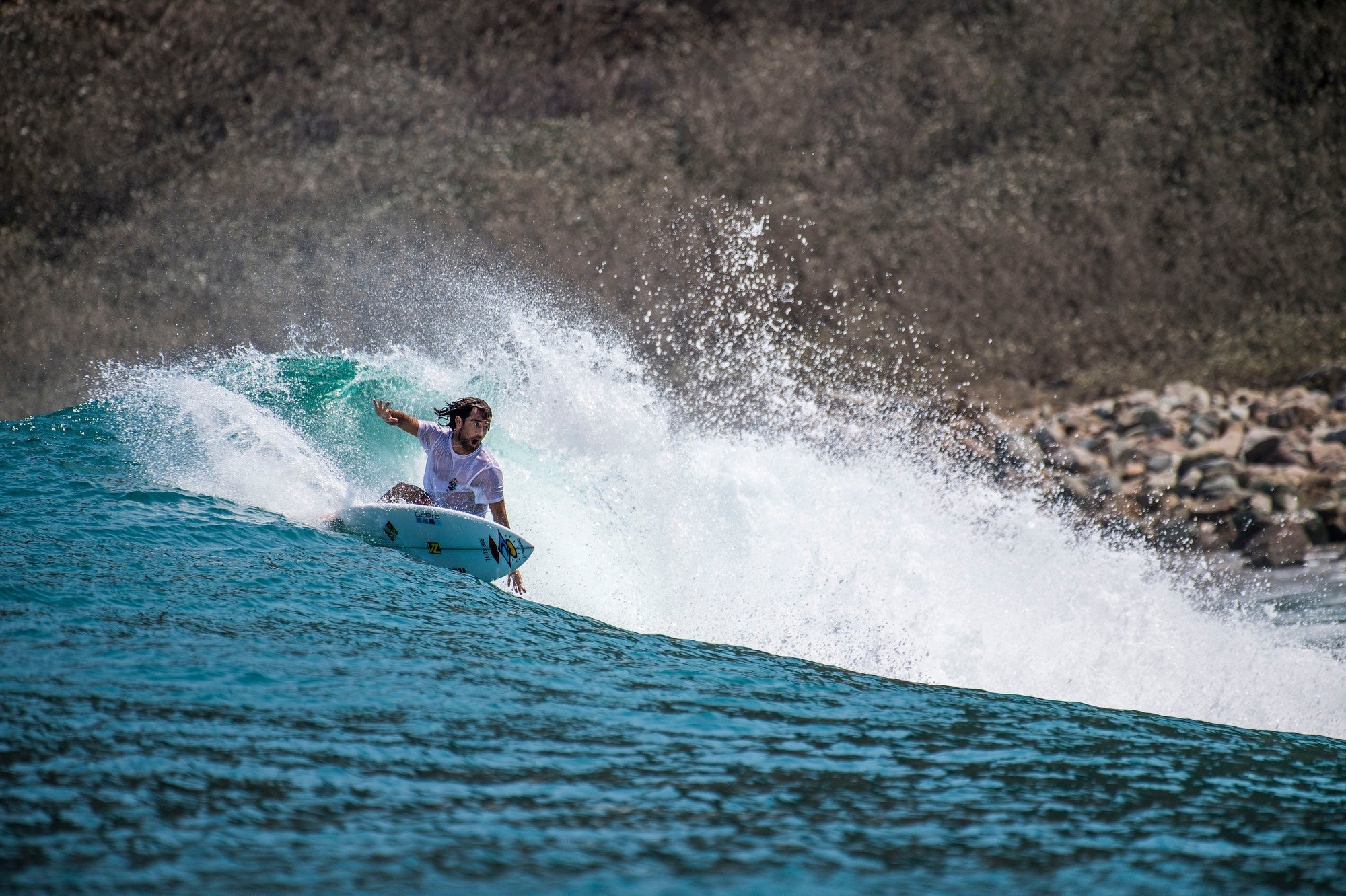
A 6'9" Fiji Finds Its Way to Mason Ho
Mason Ho recently slipped over to Mexico in search of a fun swell. It wasn't exactly a smooth start. After snapping his quiver and taking a few beatings on the sand, the session looked like it was ...
Read more
Handcrafted since 1983
Over 40 years of shaping experience, built by surfers for surfers

Proven in the water
Ridden by world-class surfers in all conditions around the globe

Small Team, Personal Service
Talk directly with board builders, no middlemen. Family owned and operated

Global Shipping
Get a Simon Jones board delivered anywhere, no matter where you surf